King Charles Tattambo
Tattambo was a respected Ngurungaeta of the Ngurai-Illum Wurrung people, born around the late 1700’s within the Gunnung Willam clan. Ngurai-Illum Wurrung Leader of the Middle Goulburn King Charles Tattambo stands as one of the most significant identified ancestors of the Ngurai-Illum Wurrung People of central Victoria. Through historical records, family memory, photographs, oral traditions and contemporary descendants, Tattambo remains a central figure in the history, identity and continuity of the Ngurai-Illum Wurrung people.
Tattambo was born prior to European settlement and lived during a period of profound change as pastoral occupation, gold mining and colonial expansion transformed the lands of the Middle Goulburn. Historical records consistently associate him with the country surrounding Murchison, Nagambie, Tabilk, Avenel, Mangalore, Rushworth, Rochester and the broader Goulburn River system. This area forms the heart of what is recognised by descendants as Ngurai-Illum Wurrung country.
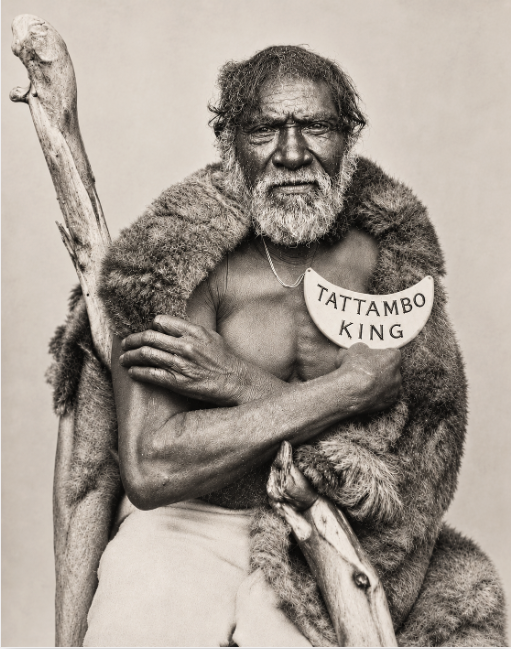
His authority appears to have been grounded in his connection to country, family relationships and his role in maintaining the identity and cohesion of the Ngurai-Illum Wurrung people during a period of rapid social disruption.
A Leader of His People
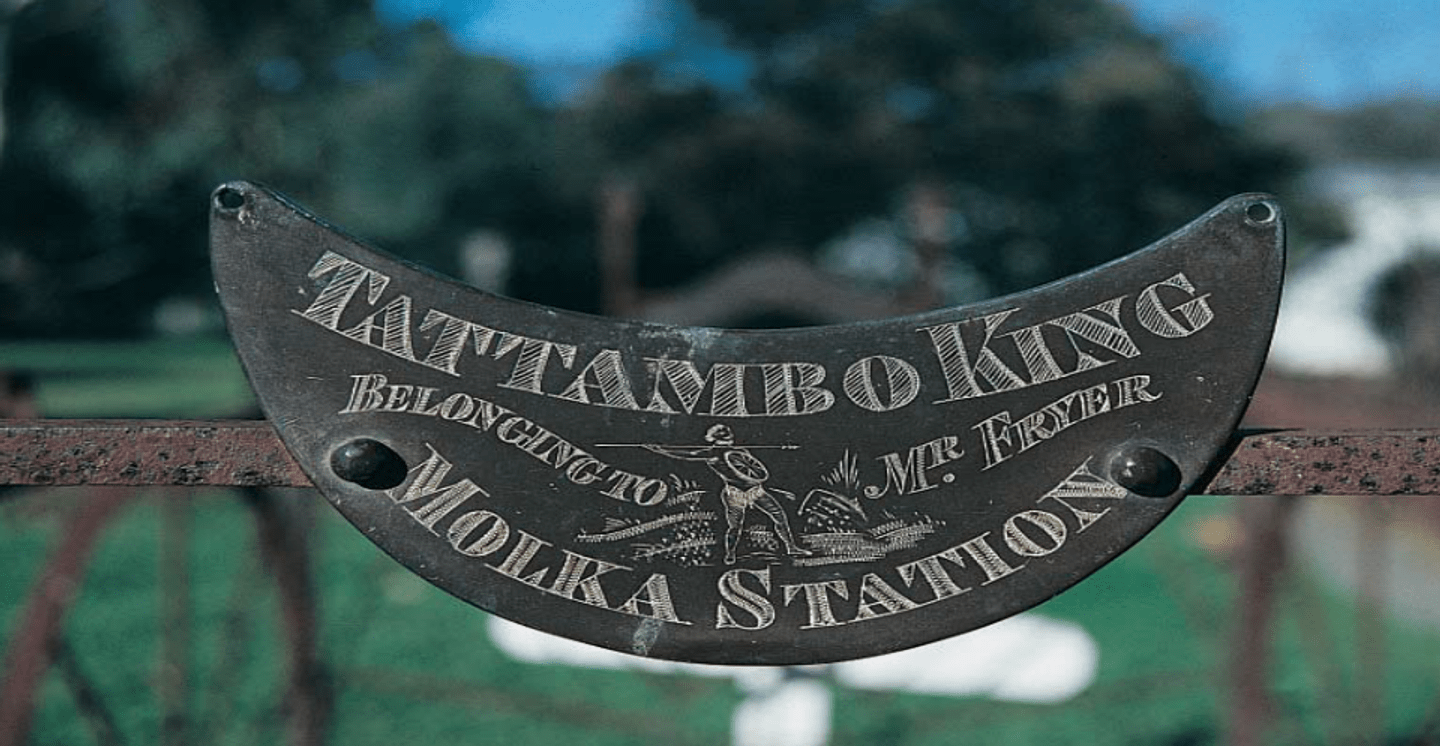
Historical sources identify Tattambo as a leading figure amongst the Ngurai-Illum Wurrung people. During the nineteenth century he became widely known to settlers, government officials and neighbouring Aboriginal groups. His standing was reflected in the issue of a king plate bearing his name, recognising him as a leader associated with the district.
Although colonial authorities often used terms such as “King” to describe Aboriginal leaders, Tattambo’s significance arose from his position within his own community and his knowledge of
country, kinship and customary relationships. Historical records indicate that he was widely respected both within his own community and by neighbouring Aboriginal groups.
Country and Traditional Territory
The country most closely associated with Tattambo extends across the Middle Goulburn region. Historical records repeatedly place him and his family in the vicinity of:
- Murchison;
- Nagambie;
- Tabilk;
- Avenel;
- Mangalore;
- Molka;
- Rushworth;
- Rochester; and
- the Goulburn River and associated waterways.
These locations correspond closely with the country now claimed by the Ngurai-Illum Wurrung
People and are consistently identified in historical, anthropological and genealogical research as forming part of the traditional territory occupied by Ngurai-Illum Wurrung people at sovereignty.
The Goulburn River was a central feature of this country, providing food, water, travel routes and ceremonial connections. Nearby wetlands, including Reedy Lake, Waranga Basin and Lake Cooper, were also important gathering places for Ngurai-Illum Wurrung families.
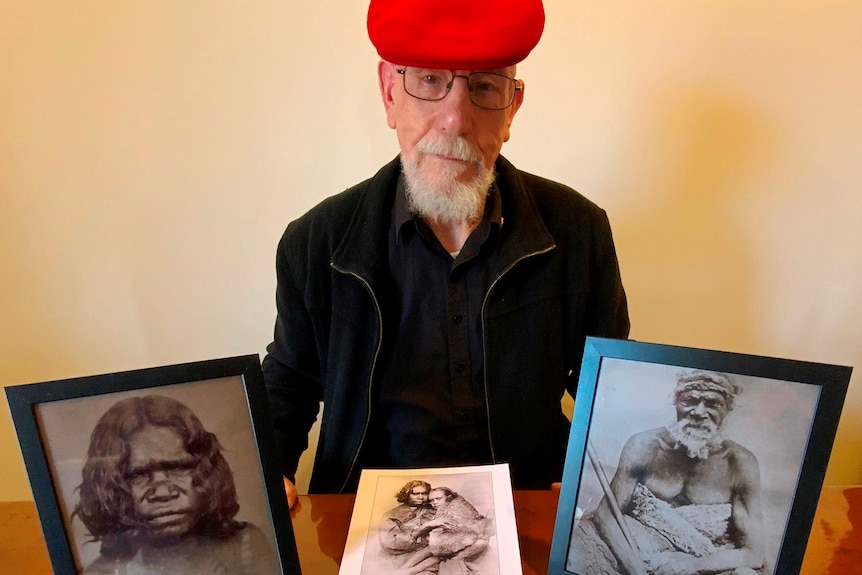
Uncle Vincent Peters says one of his Ngurai-Illum Wurrung ancestors was incorrectly claimed as Taungurung in the Recognition and Settlement Agreement. (Image courtesy ABC News)
Marriage and Family
Tattambo was married to Queen Mary Tattambo, who is also recognised as a significant Ngurai-Illum Wurrung ancestor. Historical records and family traditions consistently identify Charles and Mary as forming one of the principal family groups associated with Ngurai-Illum Wurrung country during the nineteenth century.
Together they raised a family whose descendants remain prominent within the contemporary Ngurai-Illum Wurrung community.
Their descendants include family lines associated with Jenny Hylett; Elizabeth (Lizzy) Davis; Mary Short; the Peters family; the Layton family; and numerous other Ngurai-Illum Wurrung descendants who continue to maintain connection to country
today.
Through these family lines, Tattambo’s descendants remain active in cultural heritage, community leadership, truth-telling, genealogy, native title and the preservation of Ngurai-Illum Wurrung history.
Survival Through a Period of Change
Tattambo lived during one of the most difficult periods in the history of Aboriginal Victoria. European settlement brought dispossession, violence, disease and the gradual occupation of traditional lands.
Despite these pressures, Tattambo and his family maintained their connection to country and remained associated with the Middle Goulburn region throughout their lives. Historical records indicate that he continued to travel throughout Ngurai-Illum Wurrung country and maintained relationships with neighbouring Aboriginal groups.
The survival of his family and descendants through this period is itself a testament to the resilience of the Ngurai-Illum Wurrung people.
Legacy and Continuing Significance
Today, Tattambo’s significance extends far beyond his role as an historical figure.
For contemporary Ngurai-Illum Wurrung descendants, he represents:

continuity of
connection
to country;

continuity
of family
identity;

survival
through
colonisation;

responsibility
to protect
country and
heritage;

the transmission
of knowledge
between
generations;

the enduring
existence of
the Ngurai-
Illum people.
Many descendants continue to visit places associated with Tattambo, including Murchison Cemetery, where he and Queen Mary are buried. These visits provide opportunities for younger generations to learn about their ancestors, understand their family history and maintain their connection to country.
The memory of Tattambo has also been preserved through family stories, photographs, genealogical research, oral traditions and historical records. Contemporary descendants continue to honour his legacy through their efforts to protect Ngurai-Illum Wurrung heritage, preserve family knowledge and secure recognition of Ngurai-Illum Wurrung country.
An Enduring Ancestor
More than a century after his passing, King Charles Tattambo remains one of the most important figures in the history of the Ngurai-Illum Wurrung People.
His life provides a direct link between the Ngurai-Illum Wurrung society that existed at sovereignty and the contemporary descendants who continue to identify as Ngurai-Illum Wurrung people today.
Through his descendants, his country and the knowledge passed from generation to generation, the legacy of King Charles Tattambo continues to shape the identity, culture and future of the Ngurai-Illum Wurrung People.